

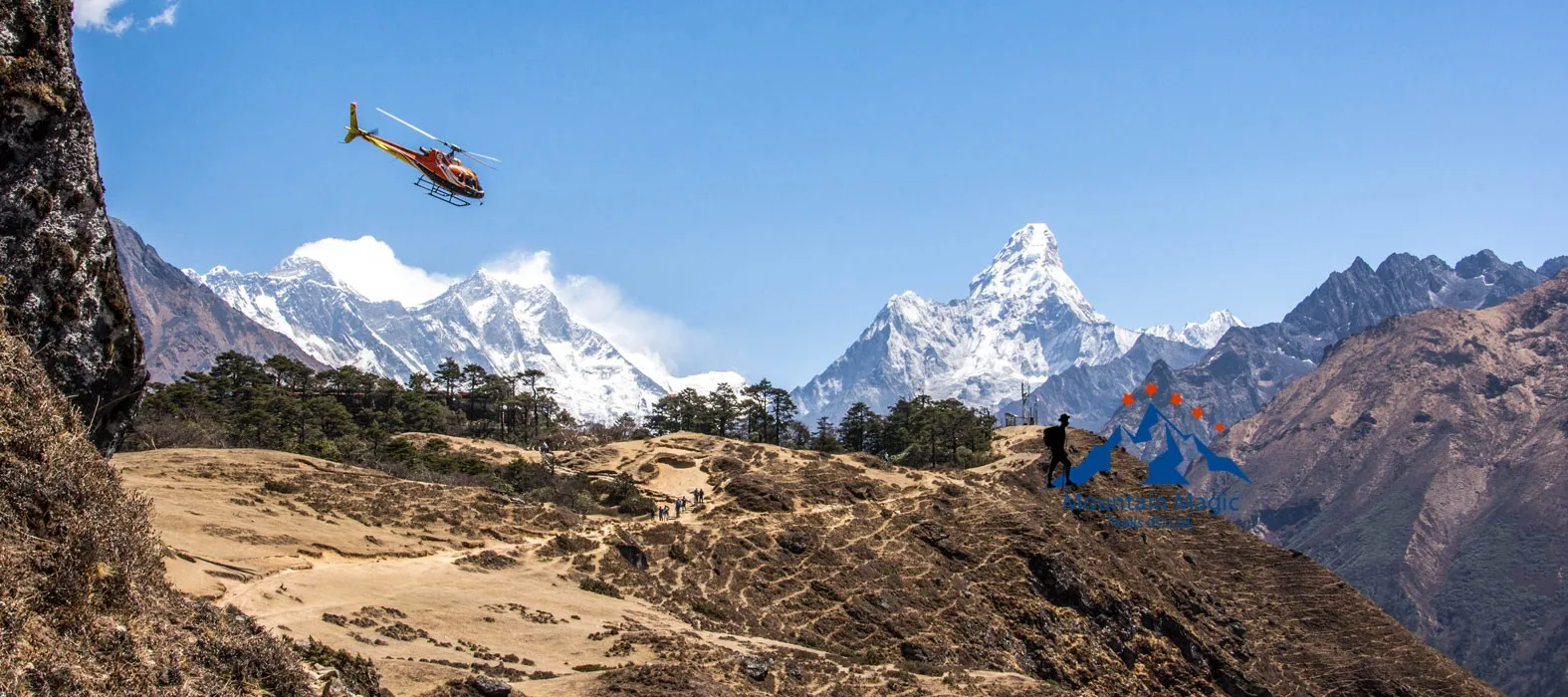
An Everest trek is not the same as an ordinary hiking trip. The trail changes every day, the altitude keeps rising, and the weather can shift without much warning.
The Everest Base Camp Trek With Helicopter Return offers a chance to experience the famous Khumbu trail on foot before returning through the mountains by helicopter. The journey includes important stops such as Namche Bazaar, Tengboche, Dingboche, Lobuche, Gorakshep, Everest Base Camp, and Kala Patthar.
Knowing what the trail may feel like can help you prepare better and enjoy the journey without unnecessary stress.
Your First Steps in the Khumbu
The adventure begins with the flight toward Lukla. Once you leave the airport, the surroundings feel very different from Kathmandu.
There are fewer roads, less traffic, and more mountain paths.
The First Trail Is Not About Speed
The walk toward Phakding is a gentle introduction to trekking in the region.
You may cross your first suspension bridge and walk beside the Dudh Koshi River. Green hills and small villages surround the trail.
Use this day to get comfortable with your shoes, backpack, and walking rhythm.
There is no reason to rush.
The Climb Toward Namche
The trail from Phakding to Namche is longer and includes a significant climb.
You will pass through Monjo and enter Sagarmatha National Park before continuing toward Namche Bazaar.
Expect Your Legs to Work Harder
The climb can be tiring, especially if you are not used to walking uphill for several hours.
Take short breaks when needed.
A slow and steady pace is much better than walking quickly and becoming exhausted early in the day.
The goal is to arrive with enough energy to enjoy Namche.
Namche Is More Than a Stop
Namche Bazaar is one of the most important places on the route.
It is also an acclimatization point, giving trekkers time to adjust before gaining more elevation.
Explore Without Overdoing It
You can walk around the village, visit local shops, enjoy mountain views, or take a short hike.
But remember that this is also a rest day.
Your body is preparing for higher elevations.
Do not turn the acclimatization day into a full workout.
The Trail Toward Tengboche
After Namche, the landscape begins to change.
The trail passes through forests and open sections before reaching Tengboche, where the famous monastery sits among the mountains.
Notice the Local Culture
Tengboche is not only about scenery.
The monastery reflects the Buddhist traditions that are an important part of life in the Khumbu.
If you visit, behave respectfully.
Follow local rules, keep your voice low, and ask before taking photographs.
These small actions show respect for the community.
Dingboche Feels Much Higher
The trail continues toward Dingboche, located at around 4,410 meters.
At this point, the altitude becomes harder to ignore.
Walking uphill can require more effort, and you may need more time to recover after each climb.
Listen to Your Body
Do not judge your progress by another trekker.
Someone may walk faster than you and still struggle later.
Your body needs time to adjust to the thinner air.
Walk slowly, drink regularly, eat properly, and tell your guide if you feel unwell.
A Day Without Moving Far
Dingboche includes an acclimatization day.
For many trekkers, this can feel strange.
You traveled all the way to the Himalayas, yet now you are being told to rest.
Rest Is Part of the Trek
An acclimatization day has a purpose.
You can take a short hike, enjoy the views, and spend time outside without pushing too hard.
The point is to help your body adjust before you move higher.
Think of this day as preparation rather than lost time.
The Landscape Becomes More Open
Beyond Dingboche, trees become much less common.
The trail moves through rocky ground, high valleys, and areas surrounded by large mountain peaks.
The scenery feels colder and more dramatic.
Watch Your Steps
The trail can include loose rocks and uneven ground.
Do not stare at the mountains while walking over difficult sections.
Stop when you want to enjoy a view.
This keeps your attention on the trail when balance matters.
Lobuche Brings You Closer
The route toward Lobuche takes you deeper into the high mountain environment.
The air is thinner, and the landscape is mostly rocky and barren.
Remember Where You Started
This is a good point to look back mentally.
A few days earlier, you were walking through green forests near Lukla.
Now you are surrounded by glaciers and high peaks.
That gradual change is one of the most impressive parts of the trek.
A Quiet Stop at Thukla
The trail passes through the Thukla area, where memorials honor climbers who died in the Everest region.
Treat the Memorials With Respect
This is not a normal sightseeing location.
Take a quiet moment before continuing.
The memorials remind visitors that the mountains are beautiful but can also be dangerous.
That reminder becomes more meaningful as you approach the highest parts of the route.
Gorakshep Is the Final Base
Gorakshep sits at roughly 5,125 meters and serves as an important stop before Everest Base Camp.
At this altitude, the simplest activities can feel tiring.
Keep Your Pack Small
You do not need all your belongings for the Base Camp walk.
Leave larger luggage behind and carry only important items.
A small pack might contain:
-
Water
-
Snacks
-
Warm layers
-
Sunglasses
-
Sunscreen
-
Camera
-
Personal essentials
Reducing unnecessary weight can make the day easier.
The Walk to Everest Base Camp
The route from Gorakshep to Everest Base Camp and back is one of the biggest sections of the trip.
The listed itinerary places Base Camp at around 5,364 meters.
Take Time When You Arrive
Reaching Base Camp can feel very different from seeing photographs of it.
You have spent days walking toward this point.
Look at the Khumbu Icefall and the surrounding landscape.
Take photographs, but do not let your camera become the only thing you see.
Give yourself a few quiet minutes to enjoy the achievement.
Kala Patthar Brings a Bigger View
The journey continues to Kala Patthar, which reaches approximately 5,545 meters.
This viewpoint is famous for broad views of Everest and nearby Himalayan peaks.
Sunrise Makes the Climb Special
The climb often starts early.
It can be extremely cold, but the morning light slowly changes the color of the mountains.
Everest and the surrounding peaks become clearer as the sun rises.
Bring your camera, but also watch the view with your own eyes.
Some experiences should not be reduced to a photograph.
The Helicopter Return Changes Everything
After completing the high-altitude trekking section, the return journey is made by helicopter.
This is what makes the Everest Base Camp Trek With Helicopter Return different from a standard return trek.
See the Route From Above
For days, you have experienced the Khumbu at ground level.
Now you can see it from the air.
Villages become tiny. Trails look narrow. Valleys appear much wider.
The helicopter provides a completely different understanding of the distance you have covered.
Do Not Ignore Weather Conditions
Helicopter operations depend on mountain weather.
Clouds, wind, and visibility can affect the flight.
Keep Your Travel Plans Flexible
Avoid making an important flight connection immediately after the expected helicopter arrival.
Give yourself some extra time.
A flexible schedule can save you a lot of stress if weather causes a delay.
Make the Trail Part of the Experience
Many people think about Everest Base Camp as the main goal.
That is understandable.
But the journey between Lukla and Base Camp is what makes the experience meaningful.
You pass through forests, villages, monasteries, high valleys, glaciers, and rocky trails.
Each section tells a different story.
What You Will Remember Most
The Everest Base Camp Trek With Helicopter Return is not only about reaching a famous destination.
You may remember the first suspension bridge.
You may remember the quiet streets of Namche.
You may remember the monastery at Tengboche.
You may remember the cold morning at Kala Patthar.
Or you may remember looking down from the helicopter and seeing the trail you had walked slowly disappear below you.
Those moments are what make the journey worth remembering.
FAQs
How long is the listed itinerary?
The trip is planned as a 10-day itinerary, including the trekking route and helicopter return.
Where are the acclimatization days?
The itinerary includes acclimatization days in Namche Bazaar and Dingboche.
How high is Everest Base Camp?
The listed elevation of Everest Base Camp is approximately 5,364 meters.
What is the highest point on the trek?
Kala Patthar is the highest point listed in the itinerary at approximately 5,545 meters.
Does the helicopter guarantee a fixed return time?
No. Mountain weather can affect helicopter operations, so travelers should keep some flexibility in their schedule.